A Cosmic Bonanza: NASA’s Roman Telescope to Capture 100,000 Explosions
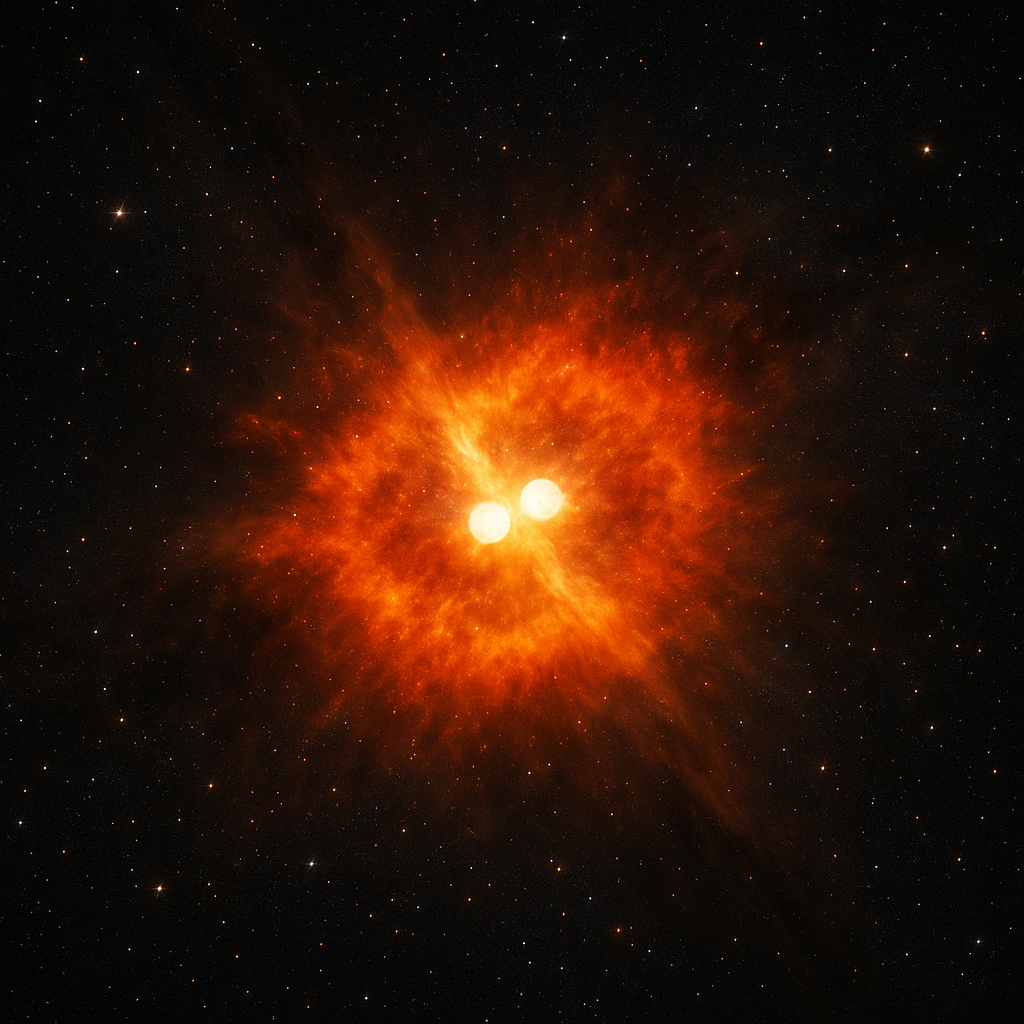
Excitement is building in the astronomy community as NASA’s upcoming Nancy Grace Roman Space Telescope prepares to revolutionize our view of the universe. A recent ScienceDaily article, based on a NASA/Goddard Space Flight Center release, reveals that this powerful telescope is expected to capture nearly 100,000 cosmic explosions during its five-day cadence survey . This extraordinary dataset promises unprecedented space exploration insights into the life cycle of stars, the mysteries of dark energy, and possibly even the remnants of the universe’s very first generation of stars.
What’s Being Surveyed—and Why It Matters
The High-Latitude Time-Domain Survey is at the heart of this space exploration mission. Over a two-year period, Roman will revisit the same swaths of the sky approximately every five days, effectively creating detailed “movie clips” of the cosmos in action. The primary targets are:
Type Ia supernovae: Stellar explosions used as “standard candles” for measuring cosmic distances. Roman is expected to detect around 27,000 Type Ia events, outpacing all current surveys combined.
Core-collapse supernovae: Occurring roughly 60,000 times in massive dying stars, these events will also be documented.
Rare, exotic phenomena: Including around 40 tidal disruption events (stars torn apart by black holes), 90 superluminous supernovae, and possibly dozens of kilonovae, resulting from colliding neutron stars—further expanding our knowledge of heavy element formation.
Especially intriguing is the possibility of observing the universe’s first-generation stars—massive, metal-poor giants that may have ended in pair-instability supernovae. Roman could detect over 10 of these elusive explosions from more than 11.5 billion years ago, providing a rare glimpse into the universe’s very early epochs.
Why This Is a Game-Changer
1. A treasure trove for dark energy research: By significantly increasing the sample of distant Type Ia supernovae—many at high redshifts—Roman will help map the expansion history of the universe and test the evolution of dark energy over cosmic time.
2. Comprehensive time-domain astronomy: The mission’s breadth—both in scale and temporal resolution—transforms transient astronomy. Rather than piecemeal discoveries, we’ll gain a sweeping and continuous view of dynamic cosmic events.
3. Machine learning-ready data: The sheer volume and diversity of observations will fuel AI-driven discovery tools, allowing astronomers to identify both known phenomena and perhaps unexpected surprises.
What Comes Next
Scheduled for launch in 2027, the Roman Telescope’s data will not only enrich our understanding of the traditional suspects—Type Ia and core-collapse supernovae—but will enable breakthroughs in high-energy astrophysics:
Gravitational physics: By observing kilonovae and tidal disruption events, Roman will provide insights into black hole behavior and the production of heavy elements.
Stellar archaeology: Detecting early supernovae from primordial stars could yield direct clues to the universe’s formative years.
Serendipitous discoveries: As Rebekah Hounsell from NASA Goddard puts it, “Roman is going to find a whole bunch of weird and wonderful things…we haven’t even thought of yet”.
Source: NASA/Goddard Space Flight Center via ScienceDaily
Read our another news article on AWS new invention/ launch of KIRO – the next generation of Gen AI.